
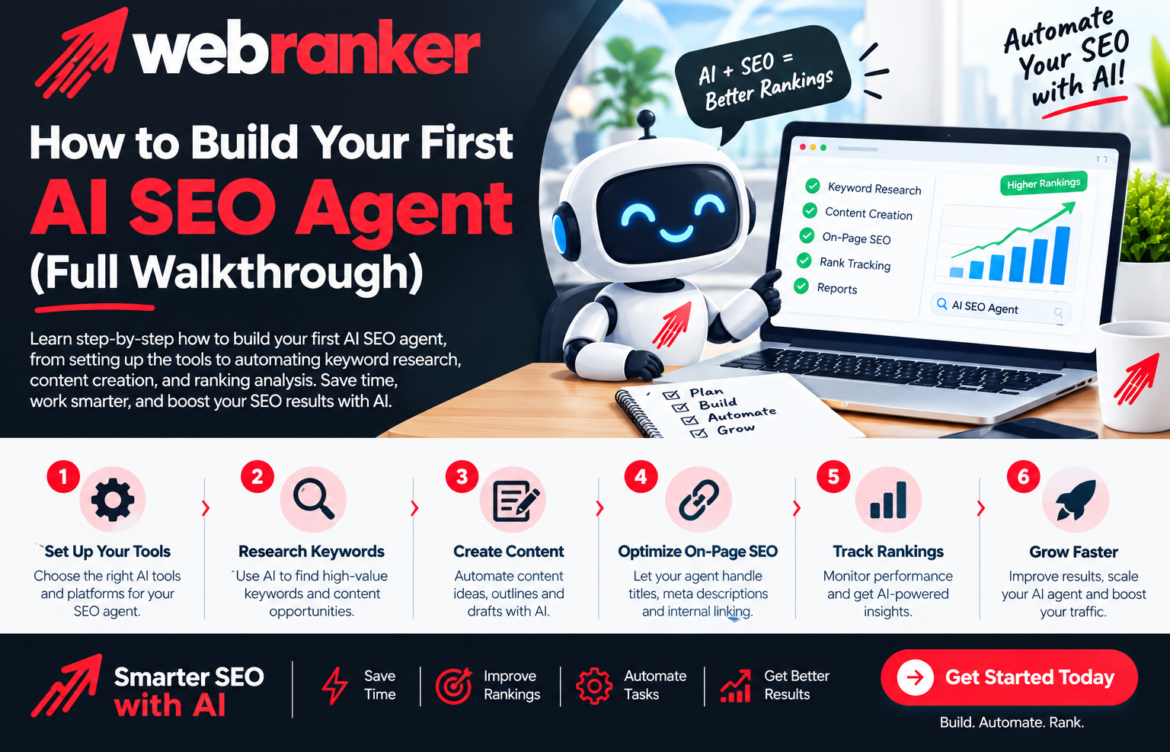
How to Build Your First AI SEO Agent (Full Walkthrough)
Search engine optimization is becoming increasingly data-driven. Businesses need to research keywords, analyze competitors, review websites, monitor rankings, create content, and identify technical issues on a regular basis. For digital marketing teams, completing these tasks manually can require significant time and effort.
AI SEO agents can help streamline many of these repetitive processes. Instead of using AI only to generate individual answers, an AI SEO agent can be designed to follow a defined workflow, analyze information, perform specific SEO tasks, and produce structured recommendations.
For businesses exploring SEO Services Florida, understanding how AI can support SEO workflows can provide useful insight into how modern search optimization is becoming more efficient and scalable.
This guide explains how to build your first AI SEO agent, what tasks it can handle, how to structure its workflow, and where human expertise remains important.
What Is an AI SEO Agent?
An AI SEO agent is an AI-powered system designed to perform a sequence of SEO-related tasks based on specific instructions, data, and objectives.
A traditional AI chatbot may answer a question such as:
“What keywords should I target for this page?”
An AI SEO agent can go further by following a workflow such as:
- Analyze the website.
- Identify the target page.
- Research relevant keywords.
- Group keywords by search intent.
- Review competing pages.
- Identify content gaps.
- Analyze on-page SEO elements.
- Create optimization recommendations.
- Prepare a structured report.
The exact capabilities depend on the tools, data sources, and instructions connected to the agent.
Why Build an AI SEO Agent?
SEO involves many repetitive activities. Automating selected parts of the process can help teams spend more time on strategy and less time on manual data collection.
An AI SEO agent can potentially help with:
- Keyword research
- Search-intent classification
- Content briefs
- Competitor analysis
- On-page SEO checks
- Internal-link suggestions
- Content gap analysis
- Meta title and description suggestions
- Technical SEO checklists
- SEO reporting
- Website audits
However, automation should support SEO professionals rather than completely replace strategic decision-making.
Human review remains important for accuracy, search intent, brand requirements, factual information, and final recommendations.
Step 1: Define the SEO Agent’s Goal
Before building an AI SEO agent, decide exactly what you want it to accomplish.
Avoid starting with a broad instruction such as:
“Build an AI SEO agent.”
Instead, define a specific objective.
For example:
Goal: Analyze a website page and create an SEO optimization report.
The agent’s responsibilities could include:
- Reviewing the target page
- Identifying the primary topic
- Suggesting relevant keyword variations
- Reviewing headings
- Checking title and meta description opportunities
- Identifying internal-link opportunities
- Suggesting content improvements
- Creating a final SEO checklist
A clearly defined goal makes the workflow easier to build and evaluate.
Step 2: Choose the SEO Tasks You Want to Automate
Your first agent should focus on a limited number of tasks.
For example, you could create an SEO Content Optimization Agent that handles:
Keyword Analysis
The agent reviews the primary keyword and identifies related terms, variations, entities, and potential search intent.
Content Analysis
It examines whether the page provides useful information related to the target topic.
On-Page Recommendations
It can review:
- Page title
- Meta description
- H1
- H2 and H3 headings
- Keyword placement
- Content structure
- Internal links
- Image alt text
Content Gap Identification
The agent can compare the topics covered on a page with topics commonly addressed by competing pages and identify areas that may deserve additional coverage.
Step 3: Give Your Agent Clear Instructions
Instructions are the foundation of an AI SEO agent.
Your instructions should explain:
- What the agent’s role is
- What information it should analyze
- What process it should follow
- What rules it should follow
- What output it should produce
For example, the agent could be instructed to:
“Analyze the provided webpage for SEO opportunities. Identify the primary search intent, evaluate the page structure, review title and heading optimization, suggest related keywords, identify content gaps, and provide actionable recommendations. Do not recommend keyword stuffing. Prioritize useful content and natural language.”
Specific instructions generally produce more consistent outputs than vague prompts.
Step 4: Create a Repeatable Workflow
A useful AI SEO agent should follow the same basic process each time.
A simple workflow could look like this:
Input → Website Analysis → Keyword Analysis → Search Intent → Content Review → Recommendations → SEO Report
Website Analysis
Start by collecting the relevant page information.
This may include:
- URL
- Page title
- Meta description
- Main headings
- Body content
- Internal links
- Images
- Structured data, where available
Keyword Analysis
Next, identify the primary keyword and related search terms.
For example, if the primary topic is SEO Services Florida, related terms could include:
- SEO company Florida
- SEO agency Florida
- local SEO Florida
- professional SEO services
- Florida SEO experts
These variations should be used only when relevant to the page and search intent.
Search Intent Analysis
Determine what users are likely trying to accomplish.
Search intent may be:
- Informational
- Navigational
- Commercial
- Transactional
Understanding intent helps ensure that the content addresses the actual needs behind a search query.
Step 5: Add Competitor Analysis
Competitor analysis can make an AI SEO workflow more useful.
An agent can review competing search results for a target keyword and identify patterns such as:
- Common topics
- Frequently used headings
- Content depth
- Frequently addressed questions
- Types of pages ranking for the query
- Potential content gaps
For example, businesses researching SEO Services Florida may expect information about services such as keyword research, technical SEO, local SEO, content optimization, link building, website analysis, and performance monitoring.
The agent can use these observations to help develop a more complete content strategy.
Step 6: Build an SEO Content Brief
One useful application of an AI SEO agent is automated content-brief creation.
A content brief could include:
Primary Keyword: SEO Services Florida
Search Intent: Commercial
Suggested H1: SEO Services Florida for Businesses Looking to Grow Online
Suggested Sections:
- What Are SEO Services?
- Why SEO Matters for Florida Businesses
- Key SEO Services to Consider
- Local SEO and Google Business Profile Optimization
- Technical SEO
- Content Optimization
- Measuring SEO Performance
- How to Choose an SEO Provider
The final brief should still be reviewed by an SEO professional before content production.
Step 7: Add Internal-Link Recommendations
Internal linking is another task an AI SEO agent can help organize.
The agent can review existing website pages and suggest relevant connections between them.
For example, a digital marketing website may have pages covering:
- SEO
- Web design
- PPC
- Email marketing
- Social media optimization
- Virtual assistant services
- Bookkeeping
An article about SEO Services Florida could potentially link to related service pages when those links genuinely help the reader.
The goal should be relevance rather than adding as many links as possible.
Step 8: Create a Structured SEO Report
The agent should produce a consistent final output.
A useful report might contain:
SEO Summary
A short overview of the page’s current condition.
Keyword Analysis
Primary keyword, secondary terms, and search intent.
On-Page SEO
Title, meta description, headings, content structure, and keyword usage.
Content Recommendations
Missing topics, questions, and opportunities for improvement.
Internal Linking
Relevant pages that could be linked from the content.
Priority Actions
A short list of the most important improvements.
This structure makes the output easier for an SEO team or business owner to review.
Step 9: Add Human Review
Automation does not mean every recommendation should be implemented automatically.
An SEO professional should review AI-generated recommendations for:
- Search intent
- Accuracy
- Brand voice
- Keyword relevance
- Content quality
- Business objectives
- Potential duplication
- Technical accuracy
For example, an AI system may recommend a keyword because it appears frequently in competing content. That does not automatically mean the keyword belongs on your page.
The final decision should consider whether the keyword genuinely serves the audience.
Step 10: Test Your AI SEO Agent
Before using an AI SEO agent across an entire website, test it on several pages.
Choose different page types, such as:
- Homepage
- Service page
- Blog article
- Location page
- Product page
Compare the agent’s recommendations with manual SEO analysis.
Look for:
- Incorrect recommendations
- Missing opportunities
- Repetitive suggestions
- Poor keyword matches
- Search-intent errors
- Unsupported claims
Use these findings to improve the agent’s instructions and workflow.
Common Mistakes When Building an AI SEO Agent
Trying to Automate Everything
SEO involves strategic decisions that may require human judgment. Start with repetitive tasks instead of attempting to automate the entire SEO process.
Focusing Only on Keywords
Modern SEO is not simply about placing keywords throughout a page.
Content should address user intent, provide useful information, demonstrate relevance, and offer a good experience.
Using AI Without Verification
AI-generated recommendations can contain errors or assumptions. Always verify important information before publishing or implementing changes.
Creating Generic Content
An AI agent should be given enough context about the business, audience, services, location, and goals to produce useful recommendations.
Ignoring Technical SEO
Content optimization is only one part of SEO. Technical factors such as crawlability, indexing, site structure, page performance, redirects, canonicalization, and structured data can also matter.
How AI and Professional SEO Services Can Work Together
AI can make SEO workflows more efficient, but professional expertise remains valuable for strategy and implementation.
For businesses looking for SEO services in Florida, a combination of technology and experienced SEO management can support a more structured approach.
AI can assist with:
- Data organization
- Research
- Content analysis
- Repetitive checks
- Reporting
- Recommendation generation
SEO professionals can focus on:
- Strategy
- Business objectives
- Search-intent interpretation
- Technical decisions
- Content quality
- Prioritization
- Implementation
- Performance analysis
This combination can make the overall SEO process more efficient without treating automation as a replacement for expertise.
How WebRanker Can Support Your SEO Strategy
WebRanker provides digital marketing solutions designed to help businesses improve their online presence. Its SEO services include keyword research, on-page optimization, technical SEO, content optimization, local SEO, link building, website analysis, and performance monitoring.
For businesses targeting customers in Florida, a structured SEO strategy can help improve visibility across relevant search results and support long-term organic growth.
Businesses can also combine SEO with other digital marketing services such as web design, PPC, email marketing, and social media optimization depending on their goals.
Final Thoughts
Building your first AI SEO agent does not require automating every part of SEO. A more practical approach is to begin with a specific workflow, define clear instructions, provide relevant data, and create a structured output.
Start with tasks such as keyword analysis, content auditing, internal-link recommendations, competitor research, or SEO reporting. Test the agent carefully, review its recommendations, and improve the workflow based on real results.
For businesses exploring SEO Services Florida, AI can become a useful part of a broader SEO strategy when it is combined with quality content, technical optimization, relevant keyword targeting, and experienced human oversight.
The goal is not simply to use AI because it is available. The goal is to use it where it can make SEO work more organized, efficient, and actionable.
Frequently Asked Questions
What is an AI SEO agent?
An AI SEO agent is an AI-powered workflow designed to perform specific search engine optimization tasks, such as keyword analysis, content auditing, competitor research, internal-link recommendations, and SEO reporting.
Can AI replace an SEO professional?
AI can automate and assist with many repetitive SEO tasks, but strategic decisions, quality control, technical judgment, and business-specific recommendations still benefit from human expertise.
What can an AI SEO agent automate?
Depending on its setup, an AI SEO agent can assist with keyword research, content analysis, SEO audits, content briefs, competitor analysis, internal-link suggestions, and reporting.
How can AI help businesses using SEO Services Florida?
AI can help organize SEO research, analyze content, identify optimization opportunities, and streamline reporting. Professional SEO strategy and human review remain important for implementation and decision-making.
How should I start building an AI SEO agent?
Start with one clearly defined SEO task. Create instructions for the agent, establish a repeatable workflow, define the required output, test it on multiple pages, and refine the process based on the results.